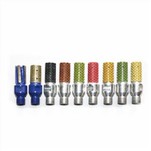
Diamond cutter head is a very important tool in cutting stone. It will produce some loss after long-term use. This is why we should properly run-in. Now we will introduce the principle of electric discharge sharpening.
Discharge sharpening is to generate instantaneous high temperature by discharging between the grinding wheel electrode and the tool electrode separated by the dielectric to melt and vaporize the tool material. When sharpening a diamond tip, because diamond is not conductive, the tip electrode is a conductive network composed of the metal phase in the diamond. It can be seen that electric discharge sharpening is a thermal etching process.
Due to the high temperature of the electric spark discharge, the diamond tip may cause heat loss and graphitization when sharpening, especially at the interface between the diamond and the cemented carbide substrate, the erosion rate is faster. Because electric discharge sharpening is a non-contact sharpening process, the grinding force is so small that it is negligible, so the sharpening efficiency is very high.
Diamond cutter head
The principle of electric sharpening is fundamentally different from the principle of traditional abrasive grinding, and it is also different from the principle of electrolytic sharpening, but it has many advantages as one of the sharpening methods of diamond cutter heads.
Diamond cutter heads should be recycled after use, so as not to pollute the environment. Also, many resources used in life are non-renewable, so when using these resources, we must try our best to recycle them for secondary use.
Diamond resources are also non-renewable. A large amount of waste diamond bits will inevitably be generated during the use and production of diamond bits. At this stage, there is a lack of effective methods for recycling them, which has caused the environment. Pollution and waste of resources.
After the waste diamond cutter head is decomposed by the mixed acid, the metal contained in it enters the solution in the form of ions, and the diamond and tungsten carbide particles are recovered from the filter residue.
Diamond cutter head
The metal ions in the leaching solution were adjusted according to the metal content in the diamond bit. Oxalic acid was used as the precipitant, and the pH value of the oxalic acid was adjusted with ammonia, and the leaching solution was studied for co-precipitation. Under suitable conditions, the comprehensive precipitation rate of each metal reaches more than 98%; finally, the oxalate is hydrogen-reduced to obtain ultra-fine pre-alloyed powder.